My New Zealand Boyhood 1927 - 1946
By Tony D'Ath
Extract
The Tearoom Days
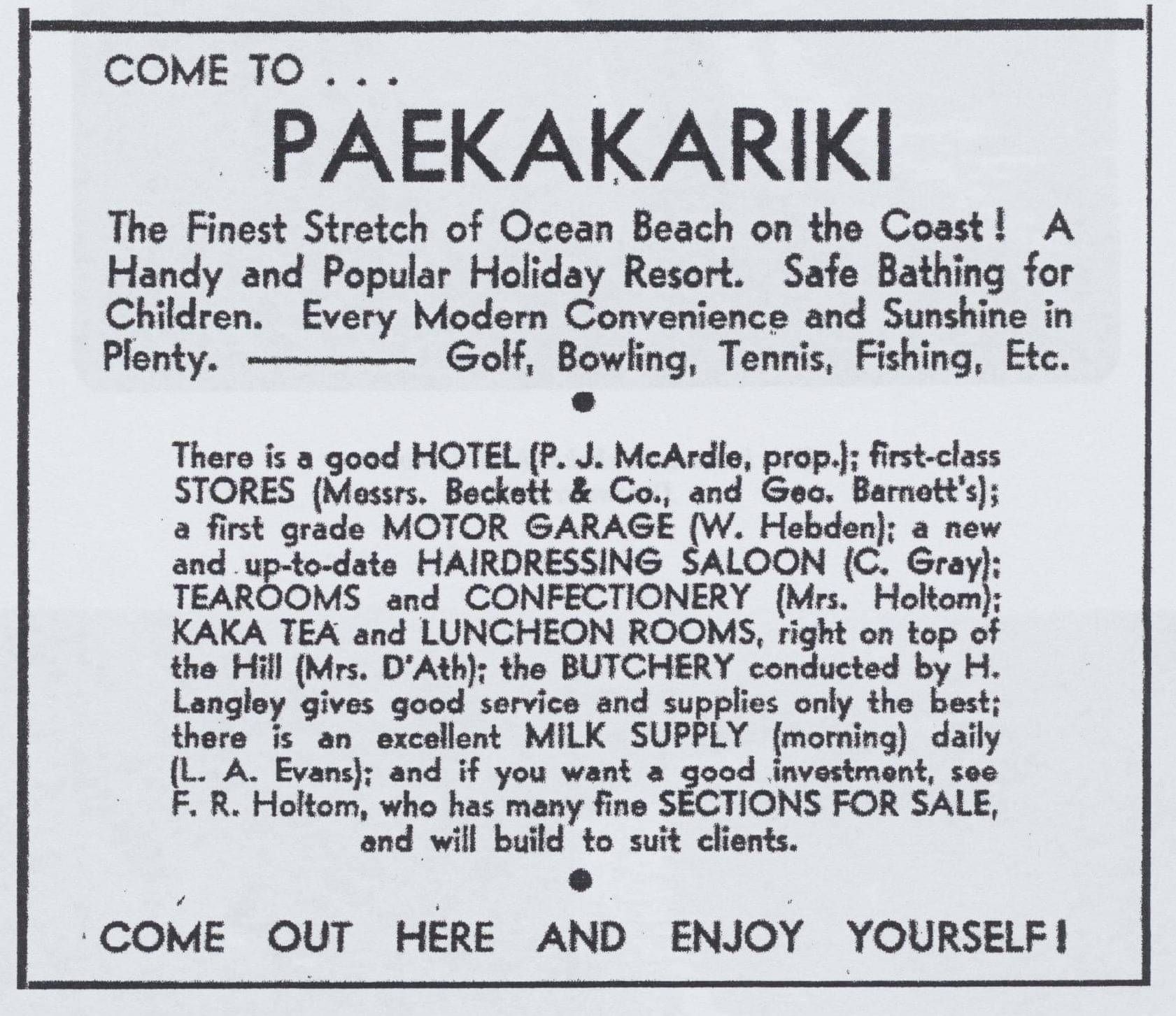
And so it was back to school, which will share from now on with what can be called "the tearoom days", beginning when "Presh" arranged a lease of the Kaka Tearooms, with the help of Uncle Eric. The tearooms where situated 1200 feet above sea level on the top of Paekakariki Hill [Paekakariki is Maori for "Home of the Green Parrot" — the kaka]. There was a spectacular view out to sea to Kapiti Island, with the tip of the South Island in the distance, to the north up the coast to Paraparaumu called "Pram" for short and south to Pukerua Bay. Sometimes on really clear days, the snow-capped cone of Mt Egmont/Taranaki would be visible.
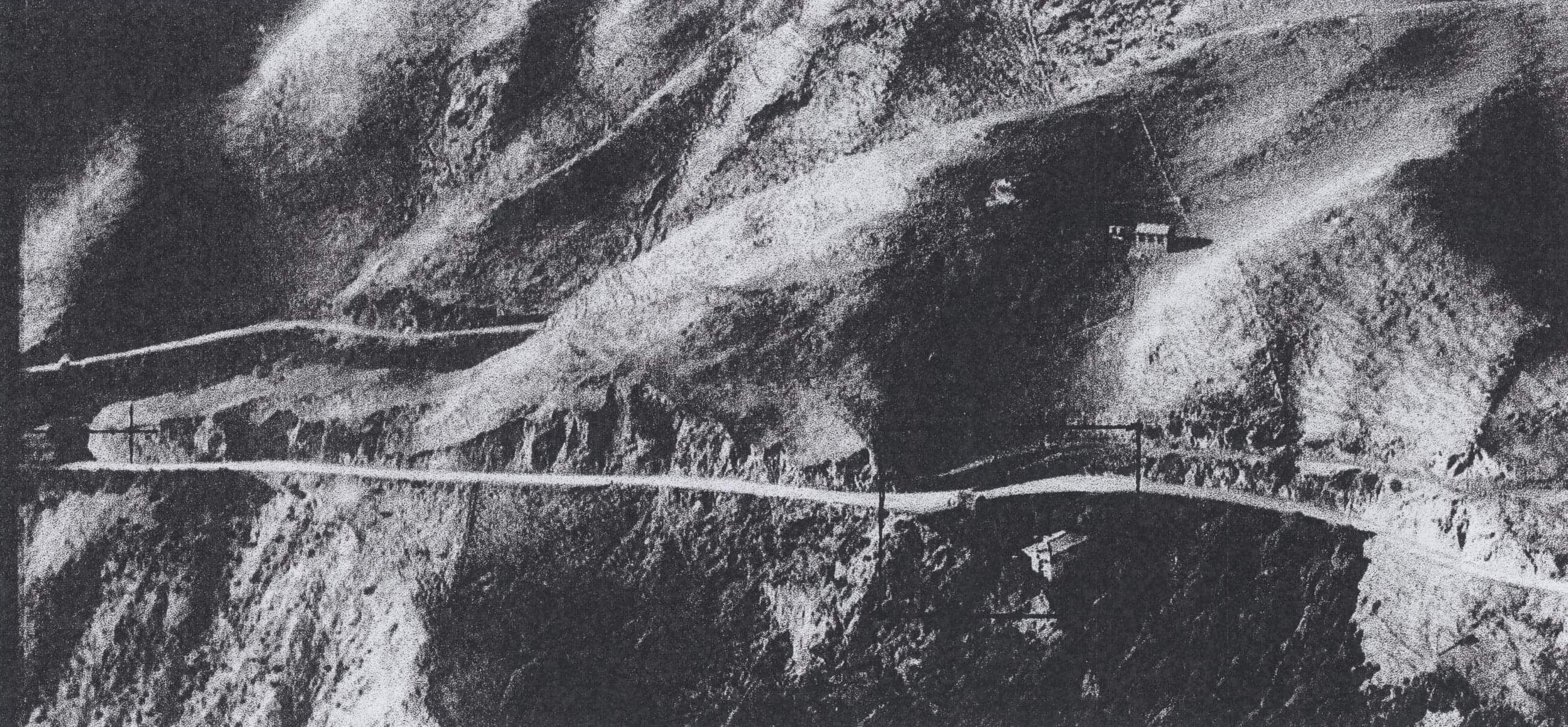
R.D.F Station, Paekakariki Hill Road, New Zealand ca 1942. Aerial view of the Paekakariki Hill road showing a Radio Direction Finding (R.D.F.) station in a valley above the road.
The Tearooms building is on the lower side of the same stretch of road, as seen on the photo below.
Alexander Turnbull Library collection
The actual tearooms-cum-house was accessed via a path leading down from the main road which was Highway No. 1. It was built on stumps on a shelf cut into the side of the hill. There was a treed garden around the main entrance facing the road, while the land at the rear of the premises fell precipitously away down to the bottom of the hill. On rough stormy days high winds would roar around the place and the tearooms would shake.
Business-wise, it was a busy period and of course, it was pre-war with no petrol restrictions in force. There was the general public, the railway tourist buses and the road transport drivers who took a spell at the tearooms from their arduous drive, in low gear, up one side and down the other side of "The Hill". Cars sometimes boiled and there were water taps located at strategic places along the route to help out. So there was a steady stream of customers to enjoy the fare provided by our "Presh", whose scones and pies were favourites, along with the "mains" featuring steak, pork sausages, ham, bacon, eggs etc. Her friend from her days at the YWCA in Wellington, "Ashie" Ashmore, was a big help at this time, and was a motherly figure with an Irish accent who fitted in well with everything.
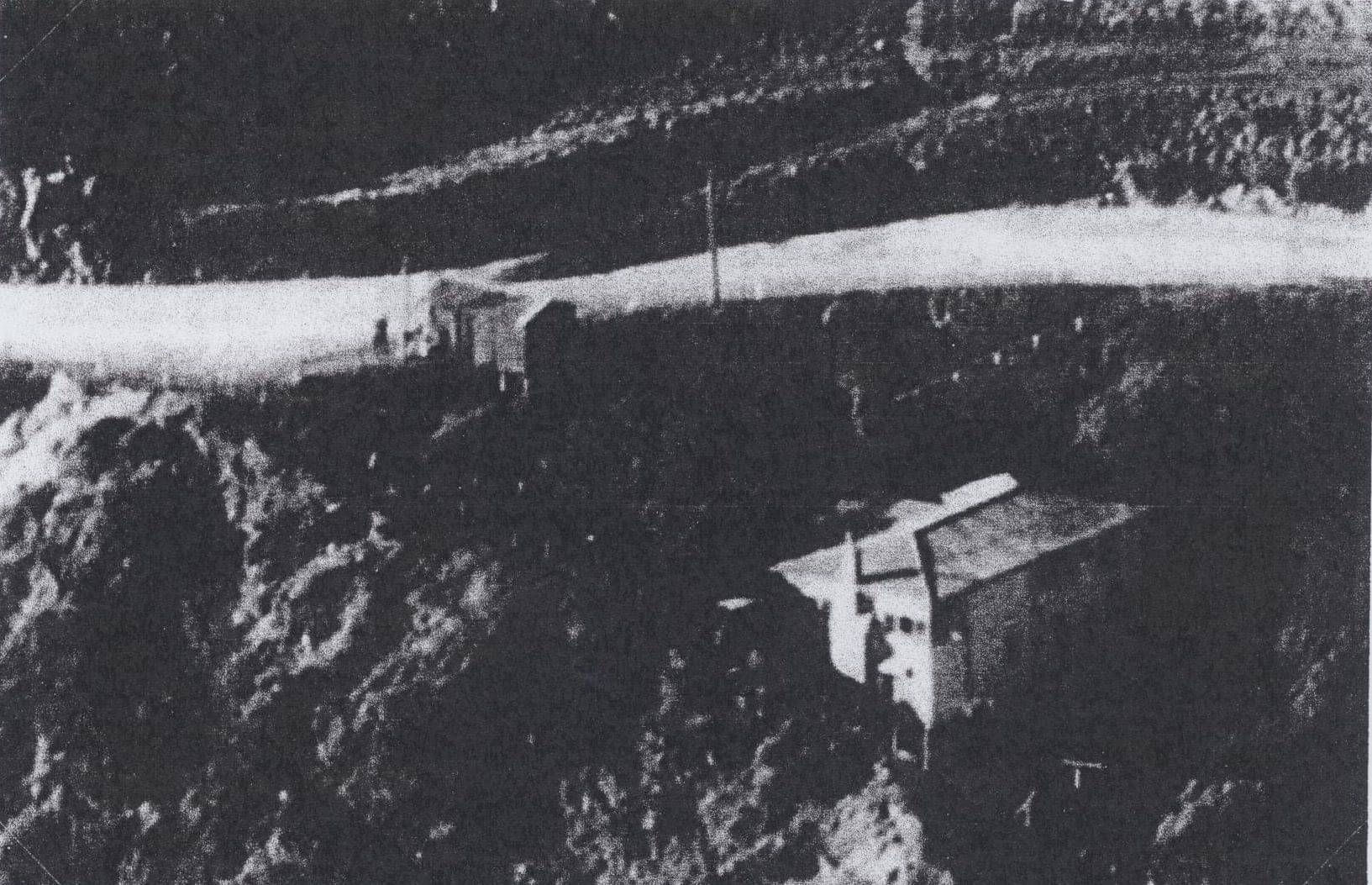
The Tearooms building is on the lower side of the same stretch of road.
The Evening Post, Wednesday November 2, 1938
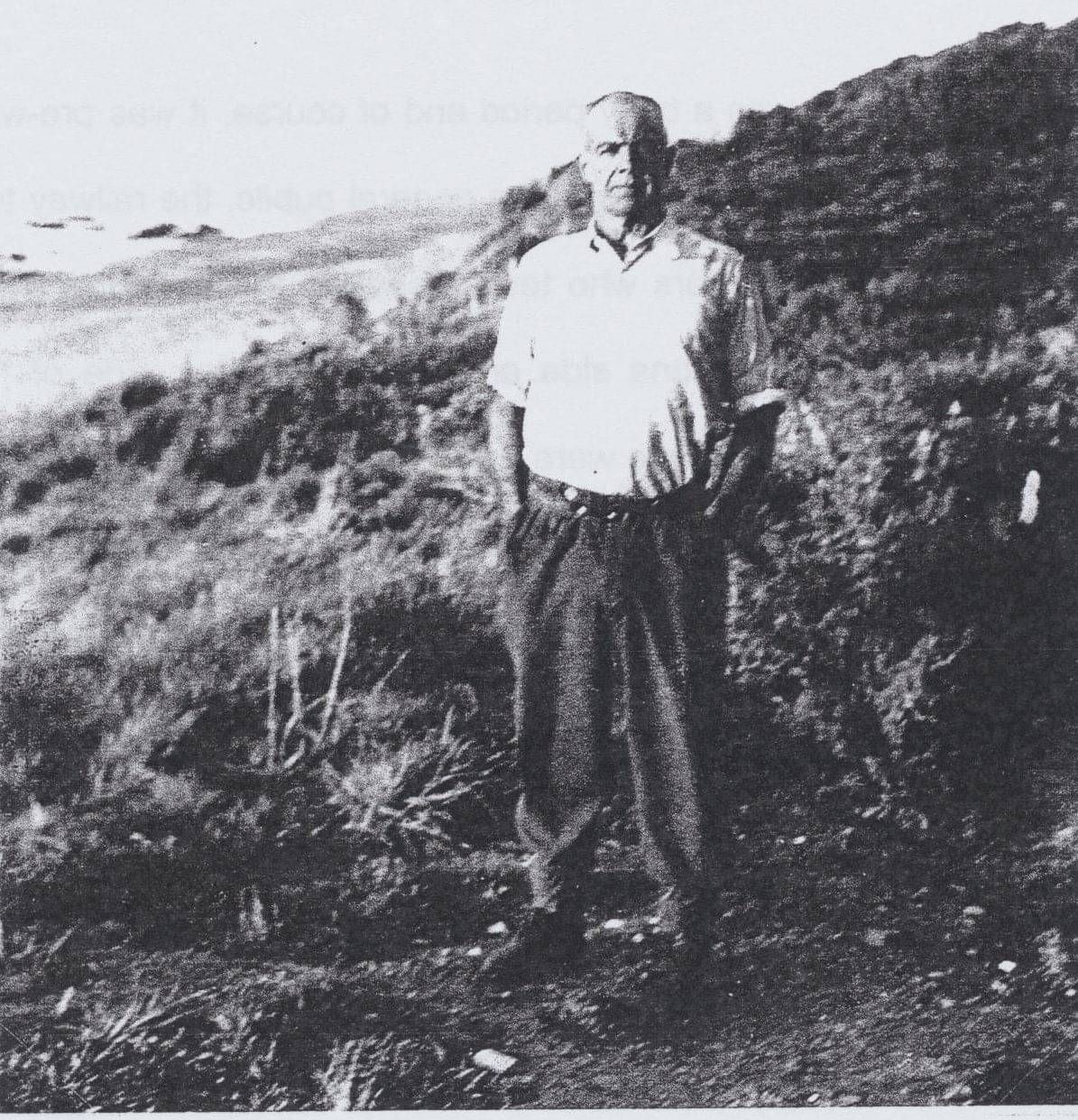
Another person who became a major presence in the years ahead was the "roadman" known as "Old Bill" who lived in a whare with a corrugated iron roof across from the tearooms. Apart from keeping the road tidy, he did odd jobs for "Presh" — very necessary ones for her such as garbage disposal, toilet care, & gardening. Bill, whom we sometimes called "Willie", was a real original, somewhat grizzled with well suntanned features and a toothless smile. He was always polite and, when introduced, would sincerely say " glad to make your acquaintance". Later on, he taught me to play Cribbage.
This was the time when Bas (Basil Hawkins) entered our lives. He drove a Europa Petrol Tanker which, to Tony & me, seemed a veritable juggernaut. We were aged eleven (me) and eight (Tone) at the time and Bas was our favourite. He used to tussle with us and we were impressed at the way he hung by his legs from tree branches. For a treat, he would seat us next to him in the front and sometimes take us with him on deliveries to Levin and places in between. In addition to his time driving the tanker, he could be found helping in the kitchen or as part of the group of drivers who considered the tearooms an essential stop over, not only for the top-notch fare but also the company of "Presh" herself who used to provide welcoming and light-hearted company.
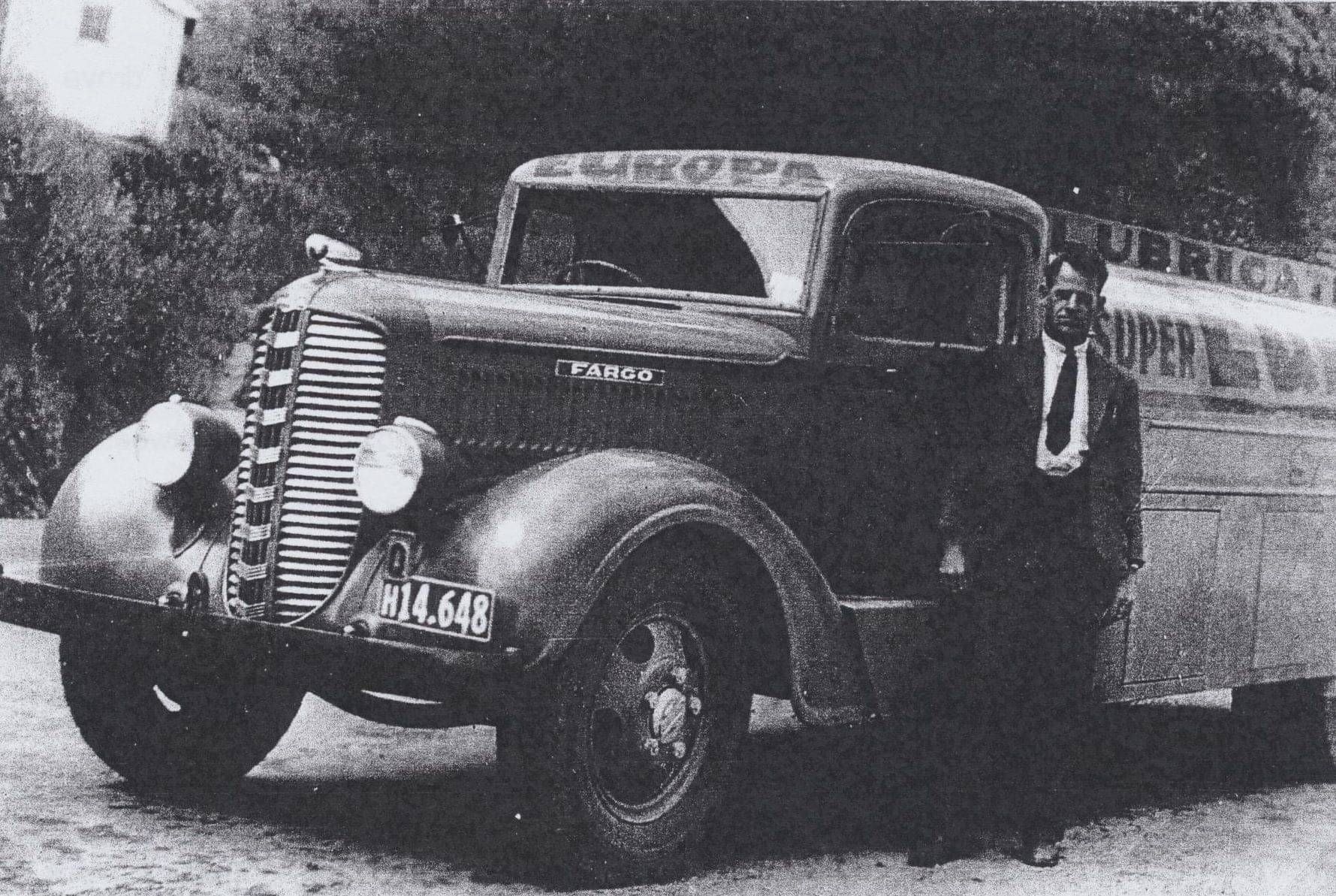
Bas with his Europa Tanker, 1938
(note "Old Bill's" whare, top left hand corner)
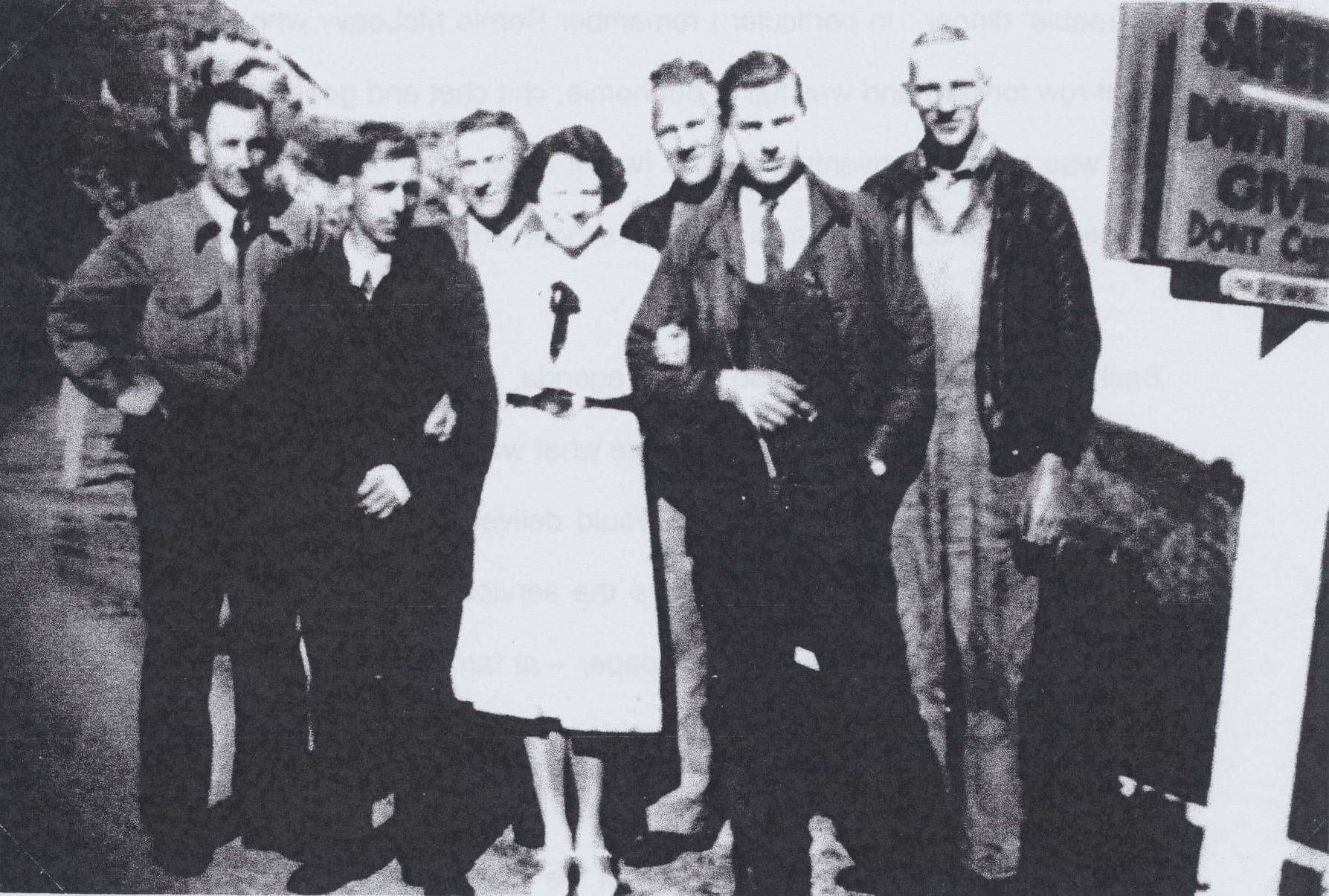
Presh with some of the transport drivers, at the "Top of the Hill"
Being at boarding school in Wellington, when it became end-of-term holiday time, Tone & I would take the tram into Courtenay Place in the city and walk to the transport drivers' goods depot where they loaded their lorries for the trip North and there, by prior arrangement by "Presh", either a Cooksley or Cappers driver would load us on as well and drop us off at the tearooms where they'd also have a 'freebie' dinner. In particular I remember Bernie McLeavy who was built like a front-row forward and was full of bonhomie, chit chat and good jokes for kids. All this was such an adventure for the two of us and of course, wonderful to be at home after the controlled rigours of the school term.
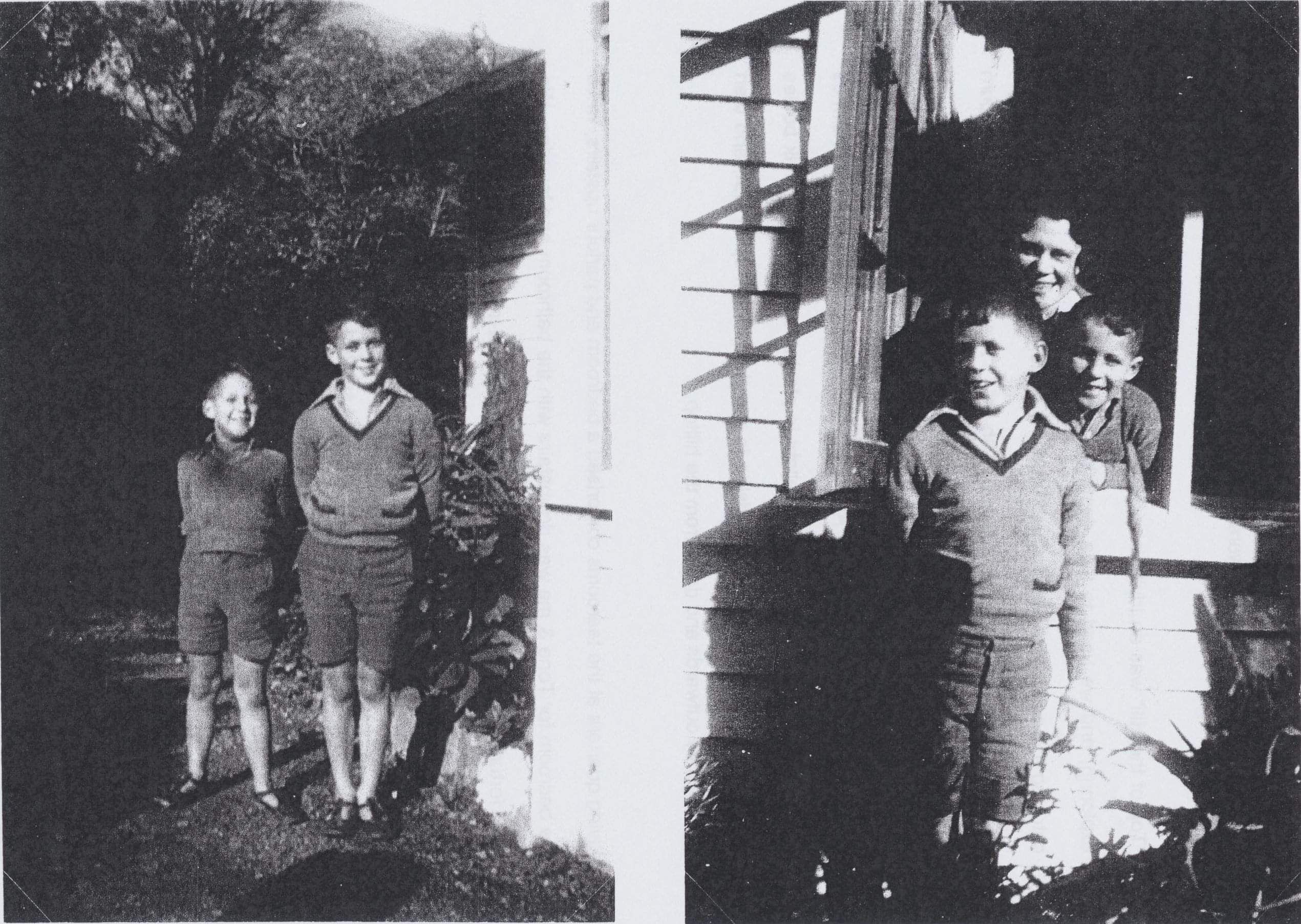
Home from School, Kaka Tearooms
top of Paekak Hill, 1938
Back-to-school tears were also on the agenda, and here it was that Noel Duncan came into the picture. He used to drive what was known as the 'service car', the equivalent of today's minibus, and would deliver "Presh's" bread — Denhams from Palmerston North. As he drove the service car, he would also throw out "The Dominion" — the morning newspaper — at farm gates, etc which we thought showed great skill, and then he would drop us off in Wellington to catch the Seatoun tram back to school. Noel wanted to name his son after us and it was going to be Michael Anthony Duncan but the initials would have been MAD so he changed the name order around. He made a wooden grass sledge for us with
lovely thick solid runners and did we ever have a lot of fun with this as, with great bravado, we took on some of the steeper grassy slopes which descended down to the valleys on the other side of "The Hill". Needless to say, there were many bumps and bruises which we wore with pride.
"Top of the Hill" was an idyllic environment for two youngsters who could go off exploring, and we used to love damming the creeks fringed with water cress, catching the eels which were caught up for a while, and then breaking the dam and seeing the water go with a "whoosh-sh-sh"! "Presh" used to have us burn rubbish and we'd sometimes try baking potatoes in the embers. Then there would be burns and butter applied or, in the case of bee stings, laundry 'blue' which was added to the washing. Another fun time was provided by 'Guy Fawkes Day' when we used to take special delight in placing sky rockets in milk bottles and shooting them off from the roadside to see them zoom up at first, and then curve gently outwards and down from the hilltop.
Living quarters at the tearooms comprised a bedroom and parlour upstairs, while the bedroom for Tone & me was downstairs with the bathroom and laundry. We were fortunate that the bathroom had a man-sized cast-iron bath in which the two of us had a ball as we whipped up some shampoo which Presh had given us into a thick bubbly layer of froth it became a spa bath of the time and mess was inevitable. The "100" itself was also nearby and sported a pedestal with a wooden seat. This had a gravity-fed flush operated by pulling a chain attached to a tank positioned at roof level above it.
Tone & I always wanted to have a Hornby train and we were spoilt one of the Christmases there because, when we looked among the presents in our pillow slips at the foot of our beds, there was a note with a string attached telling us to follow it. This we did — it took us upstairs to surprise, surprise... nothing less than a Lionel (USA) electric train complete with rails & goods wagon & a guard's van (caboose in US). It had a light & whistle operated from a transformer, and we set it up with great joy to go through tunnels of cushions which was very effective in a darkened room — and then we placed our lead farmyard animals, with fences, trees etc. beside the rails very realistic to us. Business must have been very good for us to have scored such a wished-for 'pressie'.
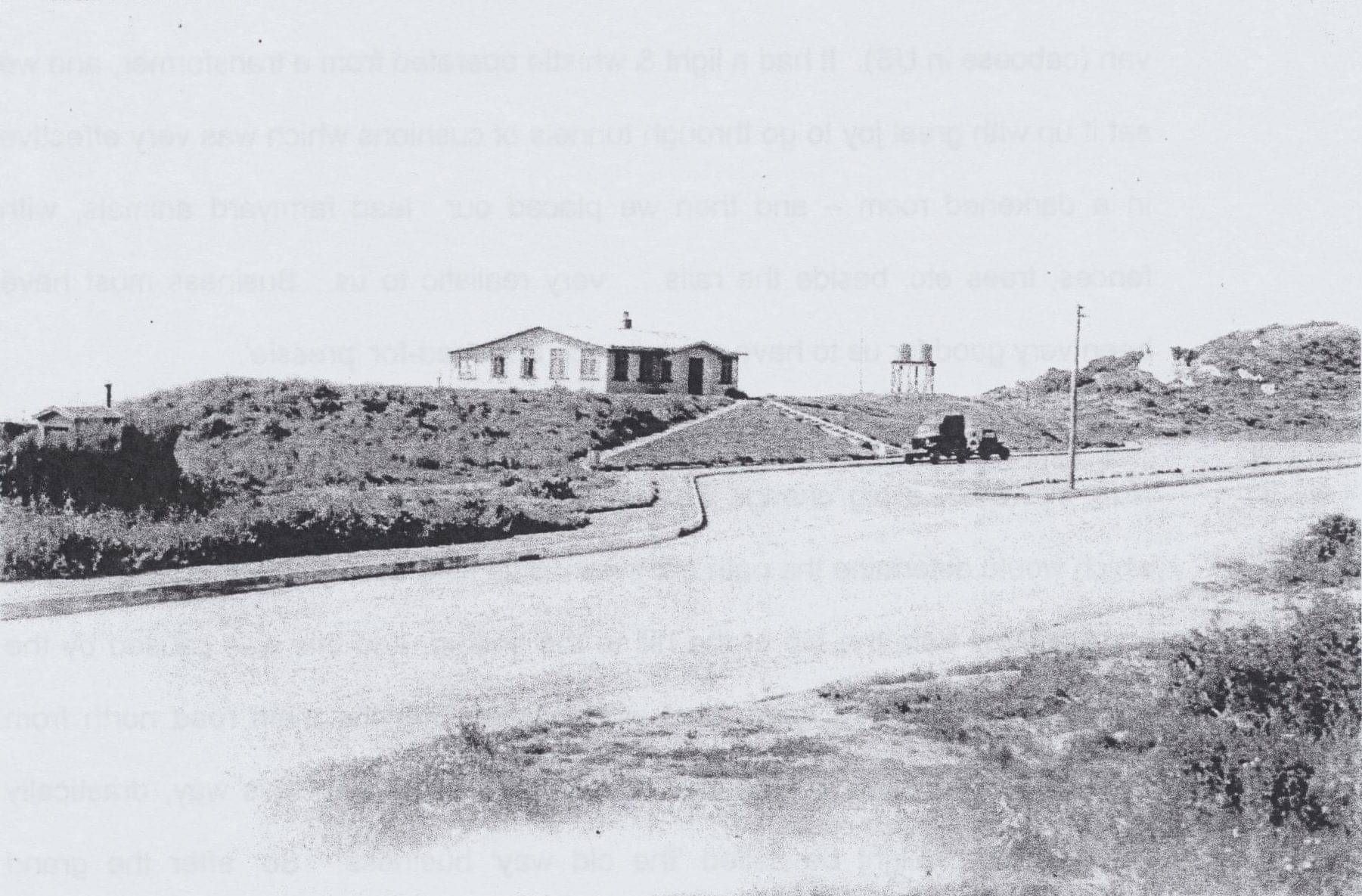
Tearooms 1942
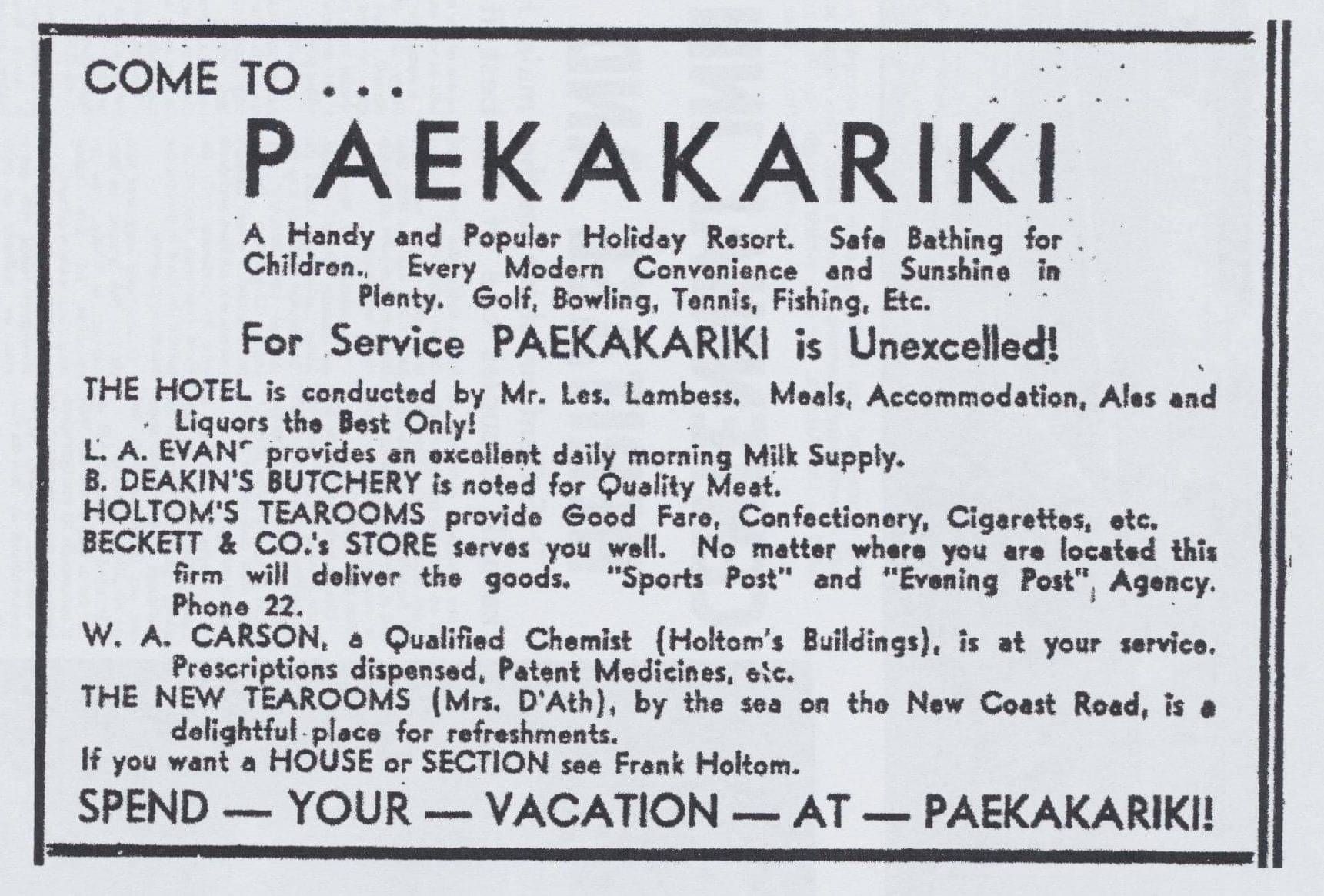
The Evening Post, Tuesday November 5, 1940.
Now, however, a big change was to happen which was at once exciting and which would determine the path our lives would take over the next six years. Our home moved from the top of the hill to the bottom, and this was caused by the completion of the new coast road which linked with the main road north from Wellington. The effect of this was that all traffic now went this way, drastically reducing what might be called 'the old way' business. So, after the grand opening on November 4th, 1939 by the Minister of Public Works Bob Semple & his wife, our "Presh" decided to go and see him and present her case for a rescue of some kind. In this she was most successful - she obviously impressed Mr Semple to the extent that he liked the idea of a tearoom/restaurant gracing the northern end of "HIS" road, the Centennial Highway. Consequently he authorised its construction, and this was done using parts of the old tearoom and an 'in the way' cottage from Pukerua Bay. The new tearoom was named the 'Centennial Inn', coinciding with New Zealand's centenary in 1940. In later years, Mr Semple became a patron and a good friend.
We quickly became used to our new abode. The building consisted not only of the tearooms but also comfortable living quarters, with the kitchen in between. From the kitchen, a passageway led past two bedrooms to the bathroom, there was a private entrance from outside as well as an interior doorway into a capacious living room with bedroom adjoining and a fireplace at one end. Here was the piano around which there was a continuation of "Presh" playing for many a "singing around".
The tearooms were entered from a broad flight of concrete steps leading up from a bitumen parking area into a roomy vestibule, Here customers could hang their coats, hats etc. before going into the dining area to place their orders, among which there were two favourites, namely, as previously mentioned, Presh's pies and her fluffy scones of different varieties. All the tables seated four people with paua shell ashtrays on each, and there was always a good view to be had across the sea to Kapiti Island. Apart from the tables, & situated against the interior wall of the vestibule, was a longish counter from which ice creams and drinks were served, the till was there, and behind on the wall were shelves containing cigarettes, tobacco & chocolates.
Now it's time to go into the kitchen the main features of which were a coal range, a large fridge, and a pantry in which bins of flour, sugar, etc were kept and which was a favourite spot for mice. There was of course a work bench, sinks etc and, not long after opening, an electric stove was installed. So everything was in place for the start of the Centenary Year during which there was a steady flow of business with several hectic highlights provided in particular by the NZ Railways sightseeing buses which we would count as they came over Paekak Hill to fill the parking lot and in one memorable day there were 28 buses parked! This was known as a "bus rush" and meant that it was "all hands to the mill". For Tony & I it was an exciting time and it was filled with many activities most of which were shared with Presh. Those which we particularly enjoyed were jumping down sand hills, swims, French cricket, and hockey using driftwood collected from the beach in front with suitable pieces of pumice. So we had much to look forward to in the school end-of-term holidays as well as helping out with different jobs.
Among those lending a helping hand at this time were, first & foremost, Bas, followed by "Rissie" (Aunt Ris) & "Ric" (Uncle Eric) who, along with daughters "Jillo" (Jillian) & "R'ellen" (Rayellen), I later called the "B" (Ballinger) family. It was Ric who provided Presh with two large orange-coloured rectangular cake tins made by him at the Ballinger Bros. Factory on the Hutt Road out of Wellington. He would sometimes take Tony & me there and we happily amused ourselves with any structures for climbing or rides to be taken from the overhead cranes, and somehow, we managed to stay out of trouble. There are many other "B" family times we shared, including those many musical occasions with Ric playing the piano accordion in fine style, in time with all the singing led by Rissie and some from me too. Then, while Tony and I were still at school, we would, on Sundays, take the tram and the bus to the Onslow Road bus stop opposite their house in Khandallah. We'd have great fun with the girls, giving them rides on our backs, and this was usually followed by a big helping of homemade ice-cream before a reluctant trip back to school.
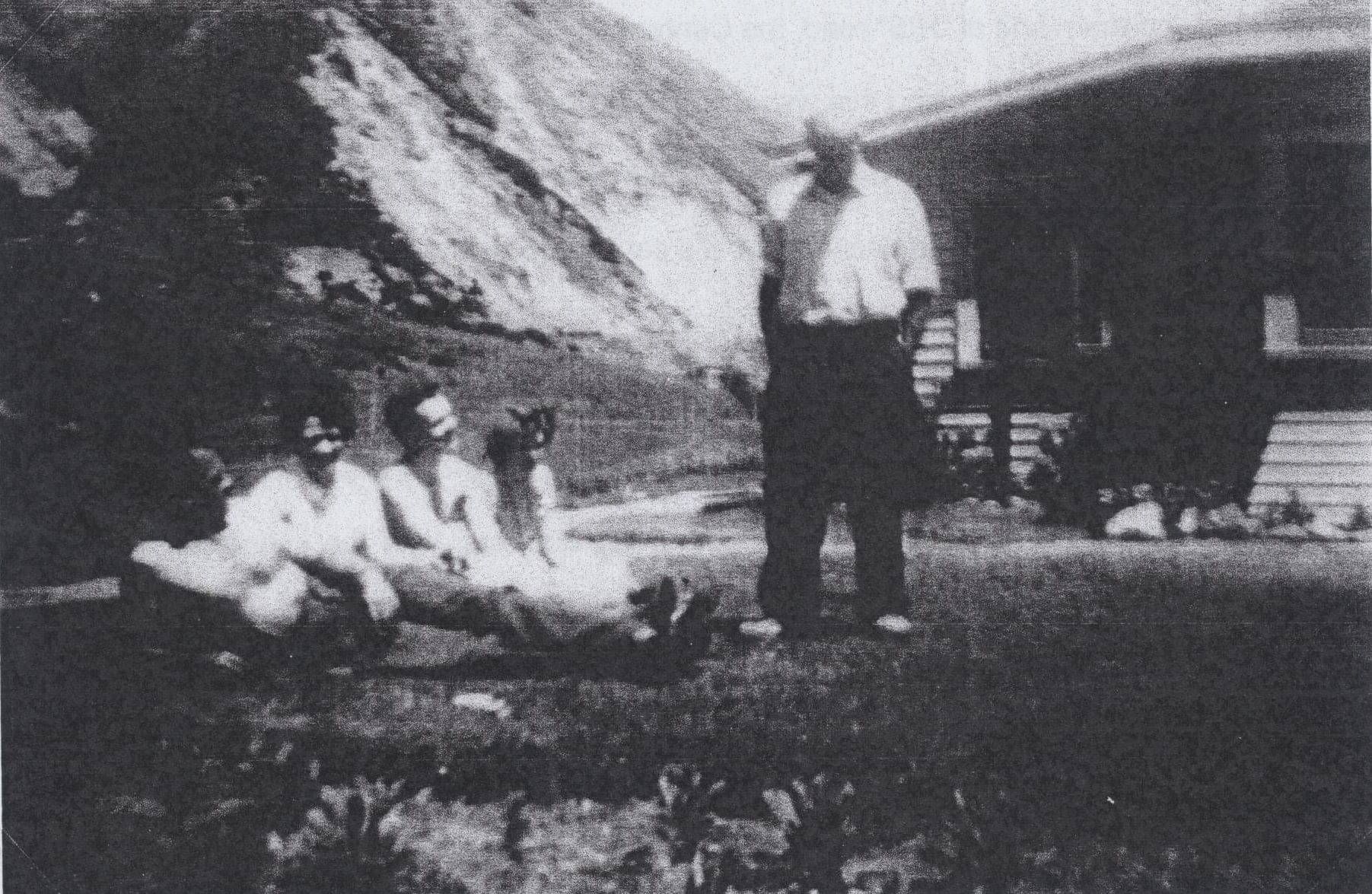
Tearooms, 1945
l-r. Bas, Presh, Me, Doreen "01d Bi11"
"Old Bill" in his patch near the beach alongside
Centennial Inn, 1943
The rest of the "Centennial Year" and on into 1941 saw the pace of business at the tearooms more and more affected as petrol restrictions were introduced. This meant that there was more time to make the most of doing things together for fun, such as walking along the sea wall ledges when the tide was out, or when there was a really big rough sea, being on the road above and ducking down below the parapet of the wall as the spray came "whooshing" over. Of course the sound of the sea was always with us and the breaking surf, when in retreat, would rub the loose rocks together to make for a real percussive effect å la castanets. We did have lots of swims and used to make fun of Presh's efforts because she seemed always to end up swimming backwards. We also did a lot of chasing around the tables, skipping up & down the parking lot, having "pepped' contests and climbing up the Hill opposite to the road down to Paekak village. There we would load up with a few supplies from "Hebden's" Grocery & Garage to take back with us to the tearooms.
Old Bill ("Willie") was still very much with us during this time and he busied himself with lighting the coal range first thing in the morning and then taking care of the grounds which included the public toilets. He also grew cucumbers over the buried tearoom scraps, in the sand among the lupins, and these were used very successfully in salads and sandwiches. Under his bed he kept a goodly supply of newspapers with the emphasis on racing news and form guides and he would walk to the Paekak pub every week and return with a bottle of beer which he would share with "Presh".
We now had plenty of time to play cribbage with Bill, and there was always much music from and at the piano which had pride of place in the sitting room. The room was large enough to accommodate a ping pong table, around which there was many a laugh playing "blind man's buff' or "smashems & crawlemsn . On cold stormy days we always had a fire in the sitting room fireplace which was well stocked with driftwood collected from the beach and it burned with wonderful colours of various green & blue hues. It was also at this time that our Presh would say "Let's go to the pictures" which were held periodically in the packed village hall, so we would stride out, usually in the early evening, with the scent of the lupins around us and, having the highway to ourselves, we would skip along and sing a very propos song, which went ..."follow the white line o'er the way".
Away from the tearooms, when there were school holidays, there were times which stood out for Tony & me. In particular were those visits which we made to close family friends, the Wilsons, who had a big sheep farm at Waikanae. It was "Auntie Wils" mainly who featured in our's & Presh's lives, she was more grandmotherly than anything else, and while stern at times, would always have kind things to say. She was able to smooth over any unfortunate disagreements which had to happen once in a while and these usually involved Mr Wilson. He was, physically speaking, a substantial individual, gruff at times with a penchant for putting on irascibility with a glint in his eye which said don't take me too seriously ... And apart from Mr Wilson, what was part of the "living on the farm" which Tone & I thought fascinating and/or enjoyable? Here we'd have to mention going to the toilet & using the rather odoriferous "Long Drop", watching the butchering, hunting rabbits with a shotgun, and sharing in the big family's roast meals. Less popular was being made to have an afternoon rest or being sent out to play when there were more interesting things happening inside. There were times also when the two of us decided if grown-ups can hunt pigs, why can't we.
So off we'd go armed with a scout knife and strings to tie up our 'catch' and we'd return to base with big stories of what got away!
There was another activity which we youngsters looked forward to, and that was when we were taken down to the front gate, usually in the early evening, to watch the Wellington to Auckland Express (called "The Limited") roar by. Cars had to cross the rail line to the gate and this closeness added to the excitement.
Sometimes the engine driver would give us a whistle!
Tony & I were indeed lucky to have this and other, what one might call, "fun times" that often ended with that dreaded phrase "back to school" . and a few tears were usually shed as we boarded Noel Duncan's service car for the trip back to Wellington. It was hard to depart from our "Presh" who loved us & we loved her.
It was good that "Old Bill" was there to remain with her, because now it was that Bas had decided to join the Army known as the New Zealand Expeditionary Force (NZEF) which was then fighting in Greece, Crete, Libya & Egypt. He was going to be really missed as he was very much a part of our family in which he had become a father figure to Tone & me. It was obvious that he & "Presh" were particularly close and "Bay Gran" & the "B" family were also there in his life from time to time.